The Regional Context: What Actually Happened
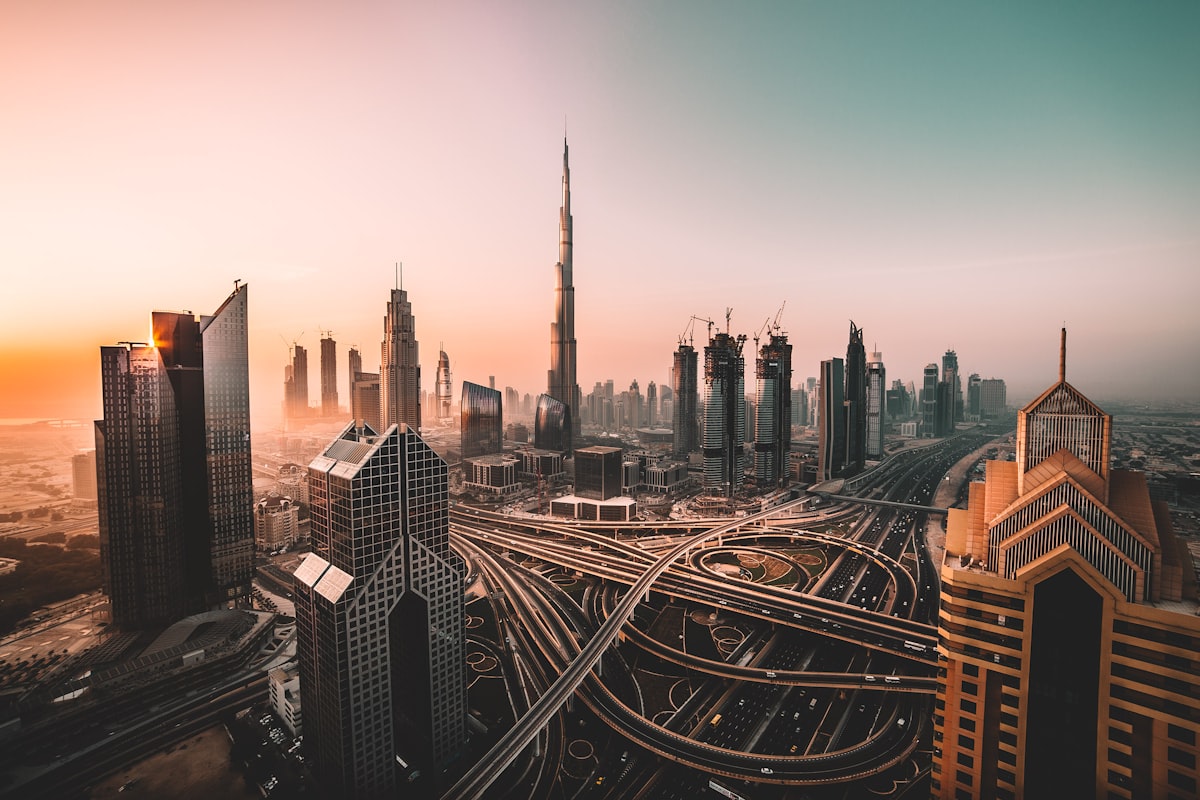
Dubai's skyline remained one of the world's most active construction zones throughout 2025-2026 despite regional tensions.
The escalation of regional tensions in the Middle East through 2024 and into 2025 — encompassing conflicts across multiple neighboring territories — created significant uncertainty in global markets. For Dubai's real estate sector, the impact was paradoxical: the city emerged not as a victim of regional instability, but as the primary beneficiary of it.
Dubai's geographic position, political neutrality, and status as the region's financial hub made it the destination of choice for capital fleeing less stable markets. The result was a sustained influx of high-net-worth individuals, family offices, and institutional investors seeking safety, stability, and a functioning legal system for their assets.
The Immediate Market Impact: Q3-Q4 2024

Transaction volumes surged in Q4 2024 as regional uncertainty drove capital flows into Dubai's stable property market.
When tensions first escalated significantly in mid-2024, the initial market response was a brief pause in transaction activity as buyers and sellers waited to assess the situation. This pause lasted approximately 6-8 weeks before being replaced by a surge in activity driven by:
- Lebanese and regional expats relocating families and assets to Dubai as a precautionary measure
- International investors viewing the conflict as an accelerant for Dubai's safe-haven status
- Israeli technology sector wealth — a significant number of Israeli tech entrepreneurs and investors chose Dubai (normalized relations since Abraham Accords) as their relocation destination
- Egyptian and Jordanian wealth seeking political risk hedging outside their home markets
- Global institutional capital reassessing Middle East exposure and consolidating in Dubai
Dubai as the Middle East's Safe Haven — Why It Worked
Dubai's emergence as the primary safe-haven destination in the region is not accidental. The emirate has spent two decades building exactly the infrastructure and regulatory framework that attracts capital in times of uncertainty:
- Political neutrality: Dubai maintains diplomatic relations with virtually all parties in any regional conflict — its neutrality is a strategic economic policy
- Property rights: Freehold ownership for foreigners in designated areas, protected by a transparent legal system modeled on English common law
- Tax environment: 0% personal income tax, 0% capital gains tax, no inheritance tax on property
- Banking stability: UAE banking sector is well-capitalized and internationally connected — capital can move freely in and out
- Infrastructure: World-class healthcare, education, and connectivity that meets the expectations of high-net-worth families
"Every regional crisis makes Dubai stronger. The capital has to go somewhere — and it comes here."
Which Areas Were Most Affected
| Area | Price Change 2024-2026 | Driver | Outlook |
|---|---|---|---|
| Palm Jumeirah | +31% | Ultra-HNW safe-haven demand | Strong |
| Downtown Dubai | +27% | International investor demand | Strong |
| Dubai Hills Estate | +24% | Family relocation demand | Strong |
| Business Bay | +19% | Professional expat demand | Stable-positive |
| JVC / JLT | +14% | Mid-market demand, rental yields | Stable |
| Deira / Bur Dubai | +8% | Organic demand, affordability | Stable |
Where the Market Stands in May 2026

As of May 2026, Dubai's property market is transitioning from a crisis-driven surge to a more sustainable growth trajectory.
By May 2026, the acute crisis-driven demand has moderated but the structural shifts it created are permanent. Key market characteristics right now:
- Transaction volumes remain elevated — 15-20% above pre-crisis averages, with a more diversified buyer profile than ever before
- Price growth has normalized — from 25%+ annual growth in crisis peak to 8-12% annually in most segments
- New supply is being absorbed efficiently — despite record off-plan launches, demand is keeping pace in most areas
- Rental yields remain attractive — averaging 6-8% gross in mid-market areas, well above comparable global cities
- The buyer profile has permanently diversified — Russian, Israeli, Lebanese, Egyptian, and European buyers now make up a larger share than ever before
What to Expect for the Rest of 2026
- Price growth moderation: Expect 8-12% annual appreciation in established areas, higher in new premium developments
- Off-plan market risk monitoring: The volume of off-plan launches requires careful developer vetting — not all will deliver on schedule
- Rental market tightening: New residents continue to arrive faster than new rental units come online in prime areas
- Golden Visa demand sustaining: The AED 2M property investment threshold for the 10-year Golden Visa continues to drive demand in the AED 2-3M price range
- Regional safe-haven status permanent: Regardless of whether regional tensions ease, Dubai has established itself as the region's premier wealth management and property investment hub
The biggest mistake investors make in 2026 is waiting for a price correction that may not come in prime areas. The structural demand drivers — safe-haven status, Golden Visa, tax advantages, and lifestyle — are permanent. However, developer due diligence on off-plan projects has never been more important given the volume of launches in the market.
Want to Invest in Dubai Real Estate?
We help international investors and local developers with marketing strategies that cut through the noise in Dubai's competitive property market.
Get a Free Consultation →